If you’ve scanned Holyland’s appetizer list and skipped past “Kebbeh” on your way to the Falafel and Hummus, you’ve missed one of the more genuinely impressive dishes on the menu. Kebbeh (more commonly transliterated as kibbeh) isn’t a garnish or a side dish — it’s a dish that Levantine home cooks judge each other on, because getting it right takes real technique.
The Short Answer
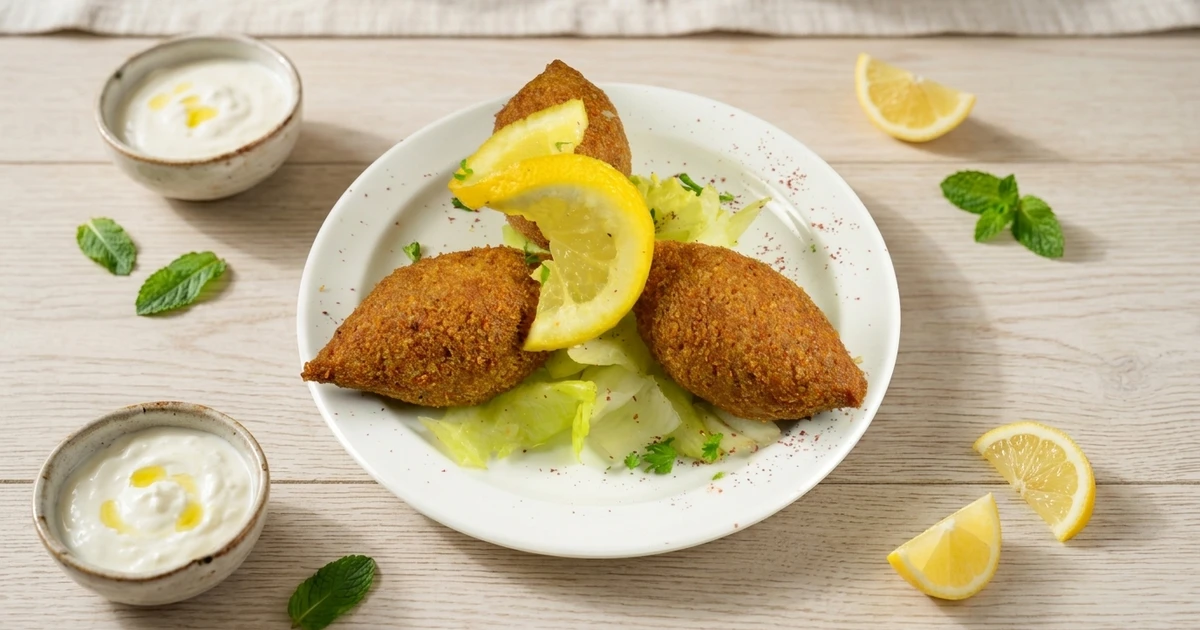
Kebbeh is a torpedo- or patty-shaped dish built from a fine bulgur wheat shell, traditionally shaped by hand around a seasoned meat filling, then fried until the outside turns deep golden and shatteringly crisp while the inside stays moist. The bulgur shell is worked into a smooth, almost dough-like paste before shaping — a step that takes practice to get thin and even without tearing. It’s one of the dishes that separates a kitchen doing genuinely traditional Levantine cooking from one doing a simplified, Americanized version of “Middle Eastern food.”
Why It’s Harder Than It Looks
Most fried appetizers on a Middle Eastern menu — falafel, for instance — are built from a single mixture, shaped, and fried. Kebbeh is a two-part construction: an outer shell and an inner filling, assembled by hand so the shell fully encases the filling without cracking during frying. Get the shell too thick and it turns doughy; too thin and it splits open in the fryer. That’s part of why Kebbeh tends to disappear from menus at restaurants that are optimizing for speed over technique — it simply takes longer to make correctly than most fried appetizers.
Where It Fits on Holyland’s Menu
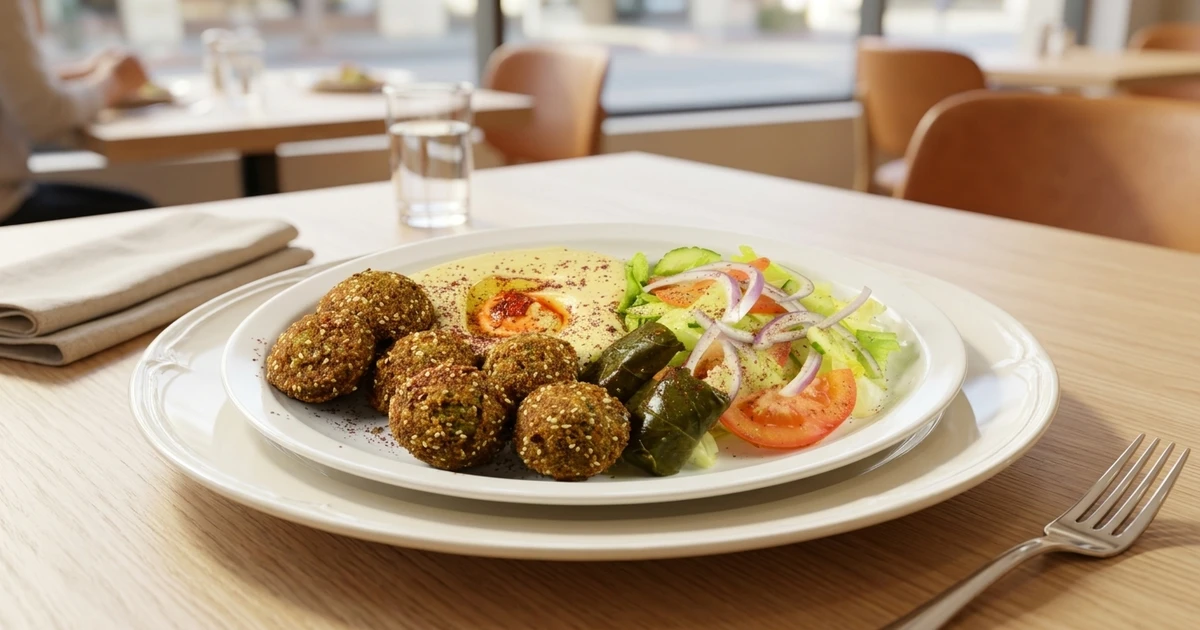
At Holyland, Kebbeh sits in the Appetizers section alongside Falafel, Hummus, Dolmas, Baba Ghanouj, and the Eggplant Plate — the section of the menu built for sharing before the main plates arrive. It’s a strong candidate for anyone ordering a Mezza for 4 who wants to add one more dish with a genuinely different texture: where the Mezza’s hummus and baba ghanouj are smooth and the tabouleh is fresh and herby, Kebbeh brings a hot, crisp, savory contrast to the same table.
How to Order It
If you’ve never had Kebbeh before, order it as a shared starter rather than a solo dish — its appeal is partly about breaking one open and finding the seasoned filling inside, which is more fun with company. Pair it with something bright and acidic, like the Tabouleh Salad or Fattoush Salad, to cut through the richness of the fried shell. For a first-time Holyland visit built around trying the kitchen’s range, a reasonable order is: Kebbeh and Dolmas to start, a Chicken Shish Kabab Plate or Kefta Kabab Plate to follow, and Kenafeh to finish.
Not Just for the Adventurous Eater
Kebbeh has a reputation as an “advanced” order among people newer to Levantine food, but it’s genuinely approachable — it’s closer in spirit to a well-made croquette or fritter than anything unfamiliar in texture. The seasoned meat filling is mild rather than heavily spiced, which makes it a reasonable entry point for someone who wants to try something beyond falafel and hummus without committing to a full Mansaf-level dinner order.
Worth the Extra Ask
Because Kebbeh takes more hands-on preparation than most appetizers, it’s also one of the clearer signals that a kitchen is cooking the traditional way rather than cutting corners. If you’re trying to figure out whether a Middle Eastern restaurant is doing real Levantine cooking or a shortcut version, checking whether Kebbeh is on the menu — and whether it’s actually good — is a fair test. At Holyland, it’s a standing appetizer, not a seasonal special, which means it’s available any night the kitchen is open.
Try It on Your Next Visit
Whether you’re new to Levantine food or you’ve had Kebbeh before and are looking for a version made the traditional way, it’s on Holyland’s appetizer menu every day the restaurant is open — Tuesday through Sunday, 11:00 AM to 8:00 PM.
Order direct from Holyland Santa Clara →
Frequently Asked Questions
What is Kebbeh made of?
A fine bulgur wheat shell, hand-shaped around a seasoned meat filling, then fried until crisp on the outside.
Is Kebbeh the same as kibbeh?
Yes — “Kebbeh” and “kibbeh” (also seen as “kibbe” or “kubba”) refer to the same dish; the spelling varies by transliteration.
Is Kebbeh halal at Holyland?
Yes. Holyland is 100% halal, and every meat used in Kebbeh and every other dish on the menu is halal-certified.
Is Kebbeh spicy?
No — the seasoned filling is mild and savory rather than heavily spiced, making it approachable for first-time Levantine diners.
What should I order alongside Kebbeh?
A bright, acidic side like Tabouleh Salad or Fattoush Salad balances the richness of the fried shell well. It also works well as one component of a shared Mezza for 4 order.